Your vagus nerve is the largest nerve in your body. It connects the brain through the heart all the way to your gut.
Vagal nerve theory controls the parasympathetic nervous system—think circulation, breath, rest, relaxation, digestion, immunity, speech! strategic thinking! (all really important functions to access when speaking up!).
When we’re in fight-or-flight, the vagus nerve shuts down (along with all the functions necessary to communicate and think on our feet!). Many of us feel like we’re floating above, unable to fully be present, embodied, or in the moment.
While we’re taught to believe that we think solely with our brain, recent research actually shows that we think in concert with our gut, on the gut-brain axis. 95% of our serotonin lives in our gut, along with our strategic thinking and communication centers.
So why are we surprised when we struggle to think on our feet in our most challenging moments? When we’re holding our breath, tensing our bodies, or doubting ourselves?
To regulate the nervous system, we want to remind the vagus nerve to relax. We want to trick the vagus nerve into activation. We need to reprioritize rest, breath, and comfort.
To activate the vagus nerve, we have to make our bodies heavy and still. We have to do the OPPOSITE of what the anxiety is telling us to do. The nerves will tell you to speak fast, fidget, pace—but unconscious movement stirs up unconscious anxiety.
Ready to stimulate your vagus nerve and have more control over anxiety when speaking?
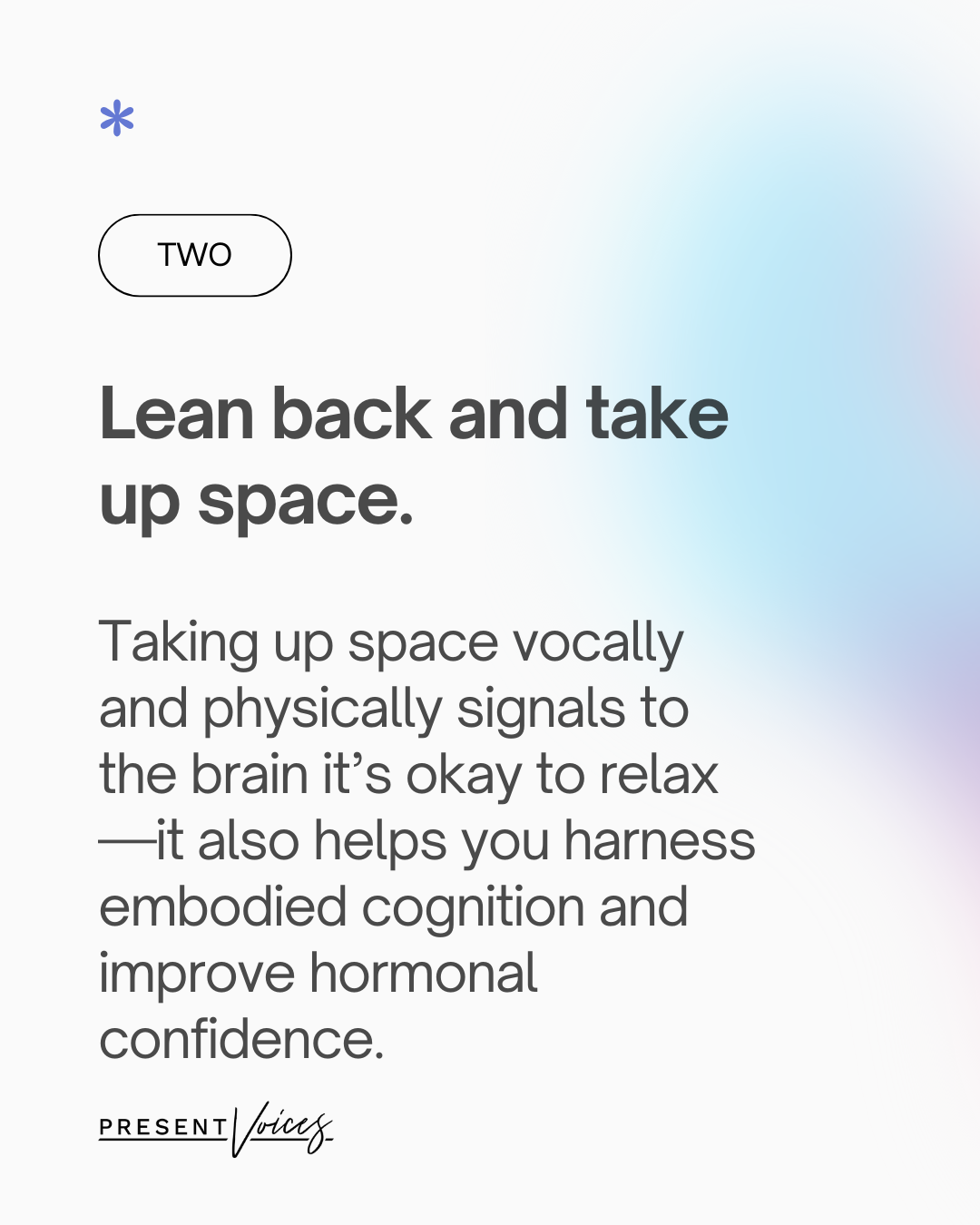
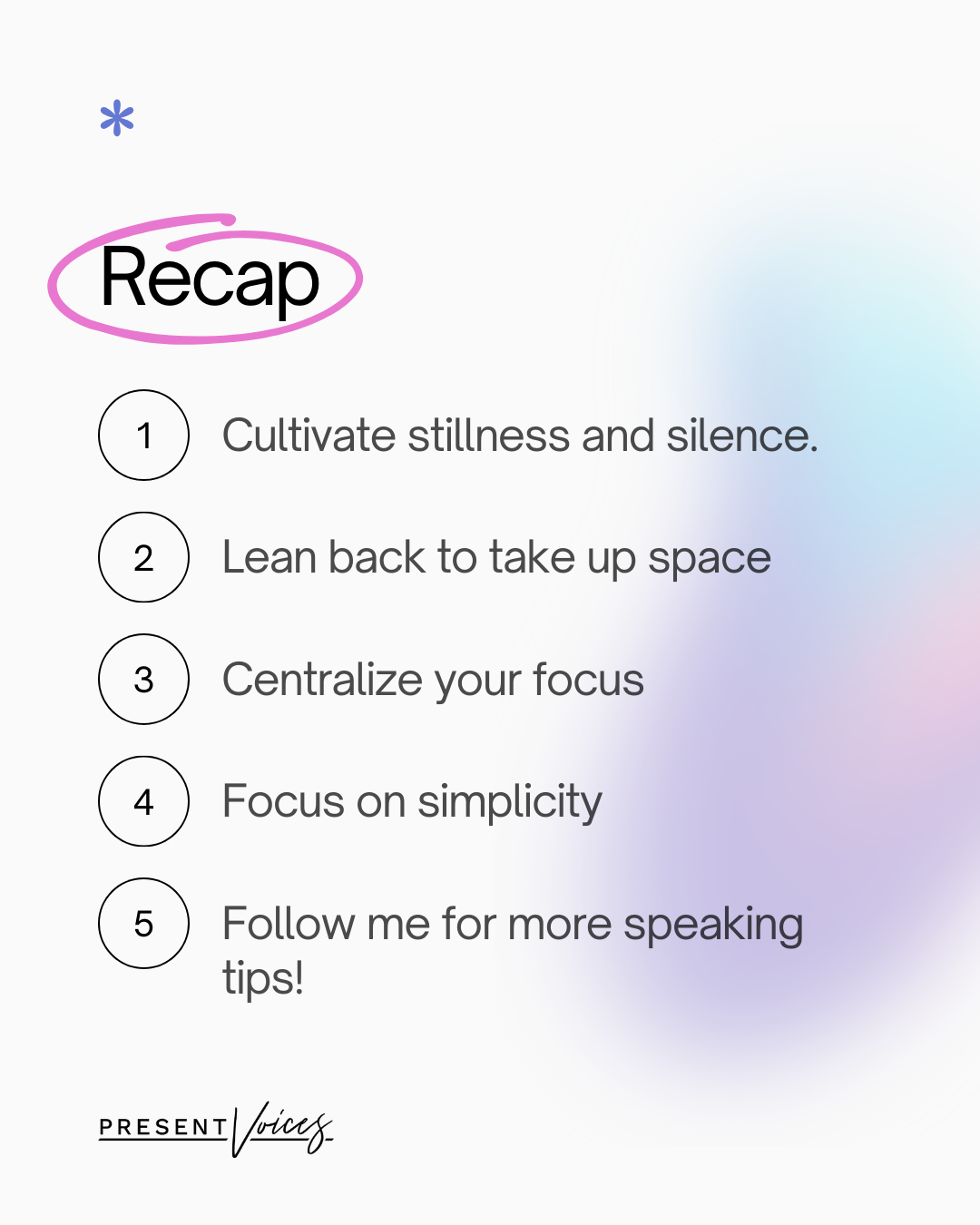
Lean back and take up space. Making your body heavy and still helps the vagus nerve turn on. It also helps you harness embodied cognition and improve hormonal confidence.
Centralize your focus. Instead of looking up and around while thinking, ground your physical attention by looking somewhere specific (a key on your keyboard, a spot out the window, something on your desk—try to keep it offscreen and in your real world environment). This helps you retain focus and think strategically (looking up and away unconsciously can trigger deep thought and we never want you in deep thought off-the-cuff!)
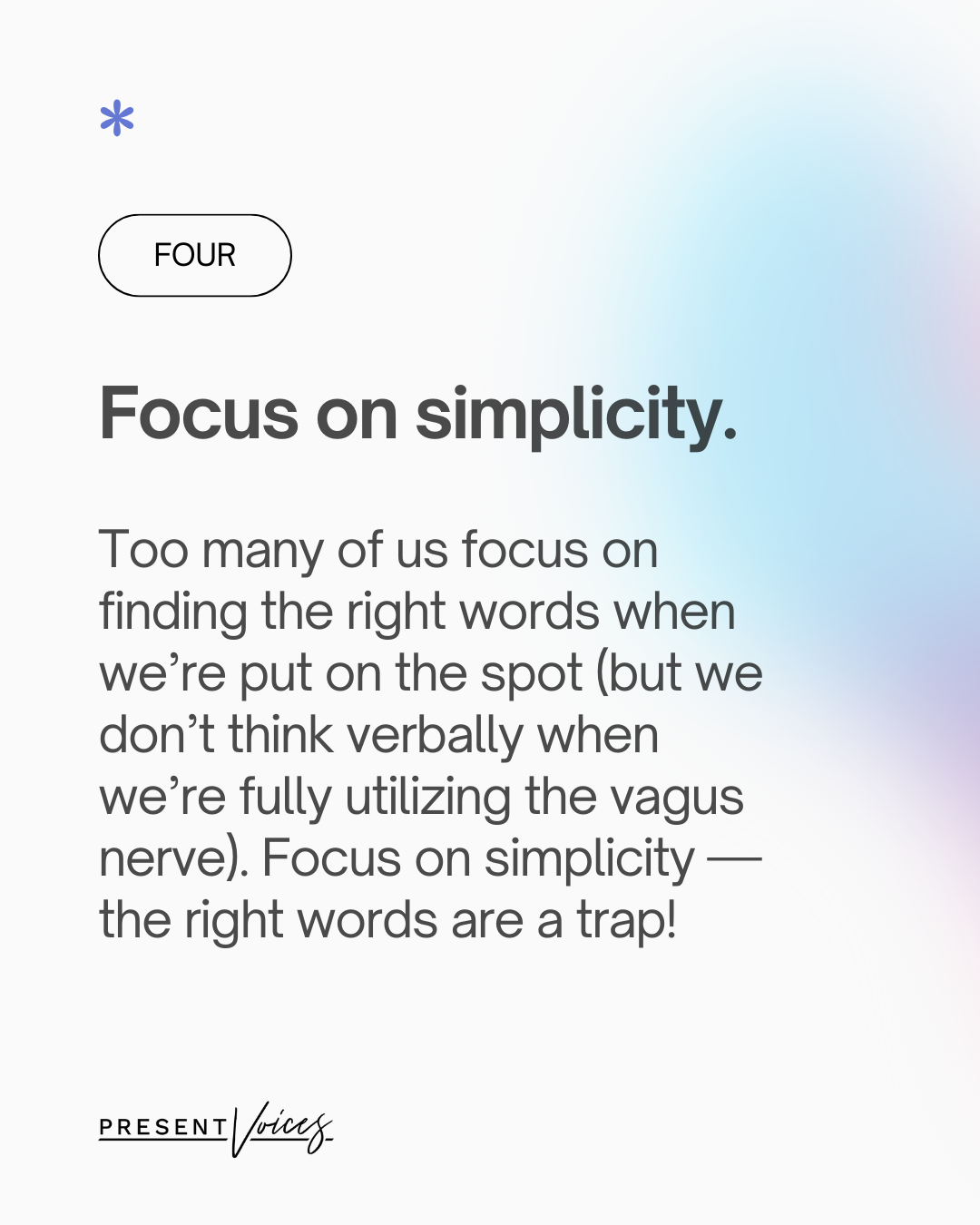
Focus on simplicity. Too many of us focus on finding the right words when we’re put on the spot (but we don’t think verbally when we’re fully utilizing the vagus nerve). The most ideal age range to communicate to is 8 and 9 year olds! So focus on simplicity (instead of “sounding professional” or “finding the right words”). The right words are a trap!
What to Do Next
Start by noticing your patterns. Where do you trust yourself? Where do you shrink? What situations trigger that second-guessing?
Then build tools for those specific moments. Not generic leadership advice—personalized frameworks that address what's actually happening for you.
Because here's the truth: Your coaching leadership style doesn't need to look like anyone else's. It needs to work for you and your team.
And when you stop trying to lead like someone else and start trusting your own approach, that's when your leadership actually becomes effective.
Not because you've perfected some external standard. But because you're finally leading from a place of authenticity and confidence in who you already are.
Does your voice disappear in certain rooms?
Take the 2-minute assessment to discover your confidence pattern.
Take the 2-Minute Assessment