

Are you comfortable in some rooms, but lose your confidence in the most important ones?
“This isn't just about communication. It really is about finding your voice in a world that needs it more than ever.”
— Sarah, General Counsel

I'm Lee. I do this work because I needed it.
I kept meeting brilliant people who were considering leaving careers they loved because of speaking anxiety that only happened sometimes (like me!).
I’ve helped hundreds of people reclaim their confidence and careers from speaking anxiety by focusing on presence, not perfection.
This work is never about becoming a "better" communicator. It's about learning to stay yourself when the room gets hard.
AS SEEN IN



Before an important meeting, do you...
Over-prepare obsessively, then still feel unprepared when it matters?
Dread it for days, replaying every possible way it could go wrong?
Worry you'll be "found out", even though you know your stuff?
And in the moment: Does your mind go blank? Your chest tighten? Your train of thought just... disappears?
You're not alone. And there's nothing wrong with you.
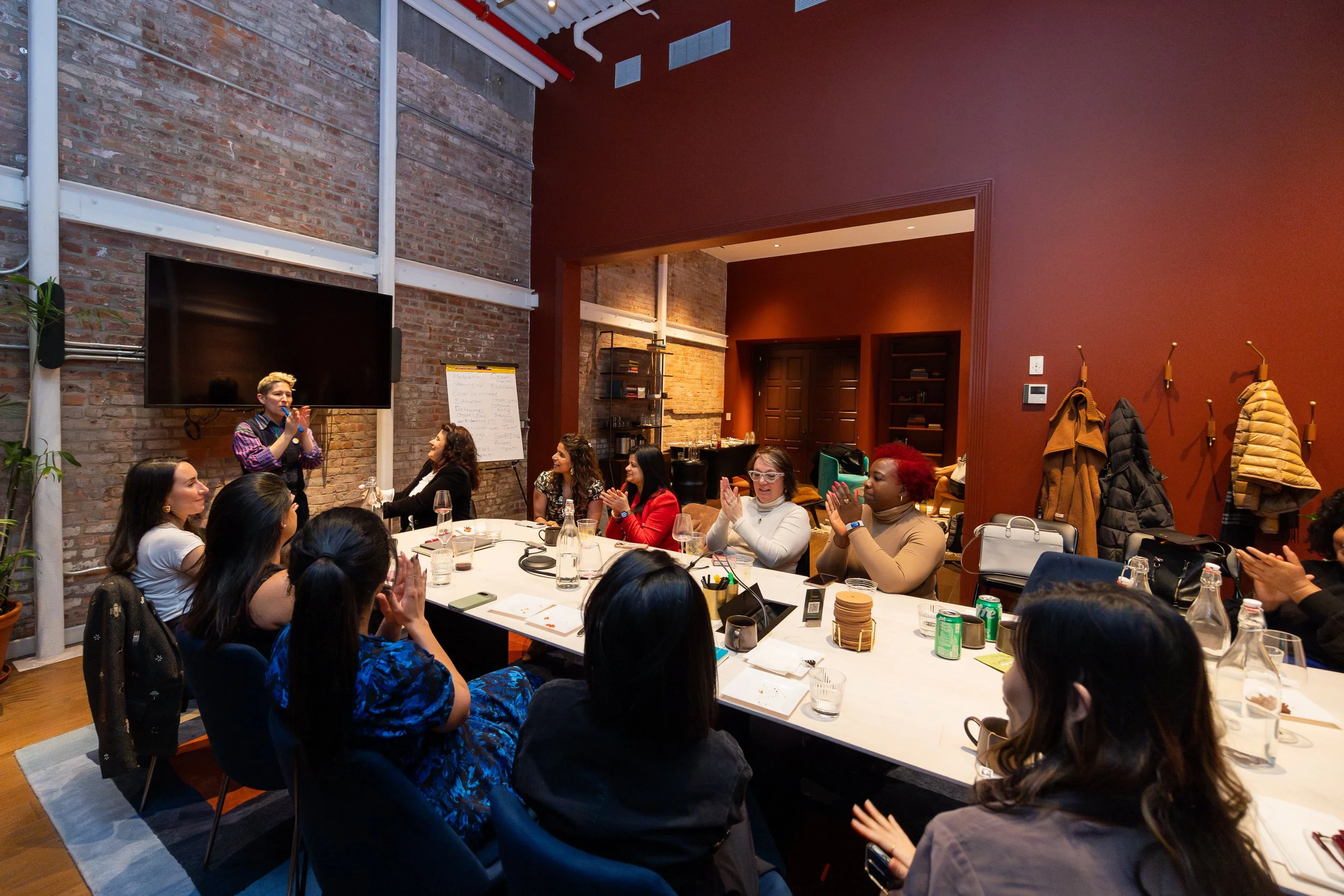



















This isn't a communication problem.
You communicate perfectly when you're comfortable, with your team, in familiar settings, one-on-one.
When your voice disappears, it's not because you don't know what to say.
It's because your attention splits: half trying to remember what you want to say, half monitoring "do I sound confident? do they think I know my stuff?"
That split is what causes the brain fog, the lost train of thought, the racing heart, the shortness of breath.
This is a focus issue. And focus is a muscle we can strengthen.

If you're here, you're probably mid-career with deep expertise. You're empathetic. Detail-oriented. Conscientious. These are strengths and they make you excellent at your work.
But in hierarchical workplaces, they can work against you:
Your empathy picks up every micro-signal → you absorb the anxiety in the room
Your detail-orientation makes you over-prepare → you can't access your expertise under pressure
Your conscientiousness makes you deferential → you shrink around authority
Why is this happening?

From PresentVoices Clients
Not sure where to start?
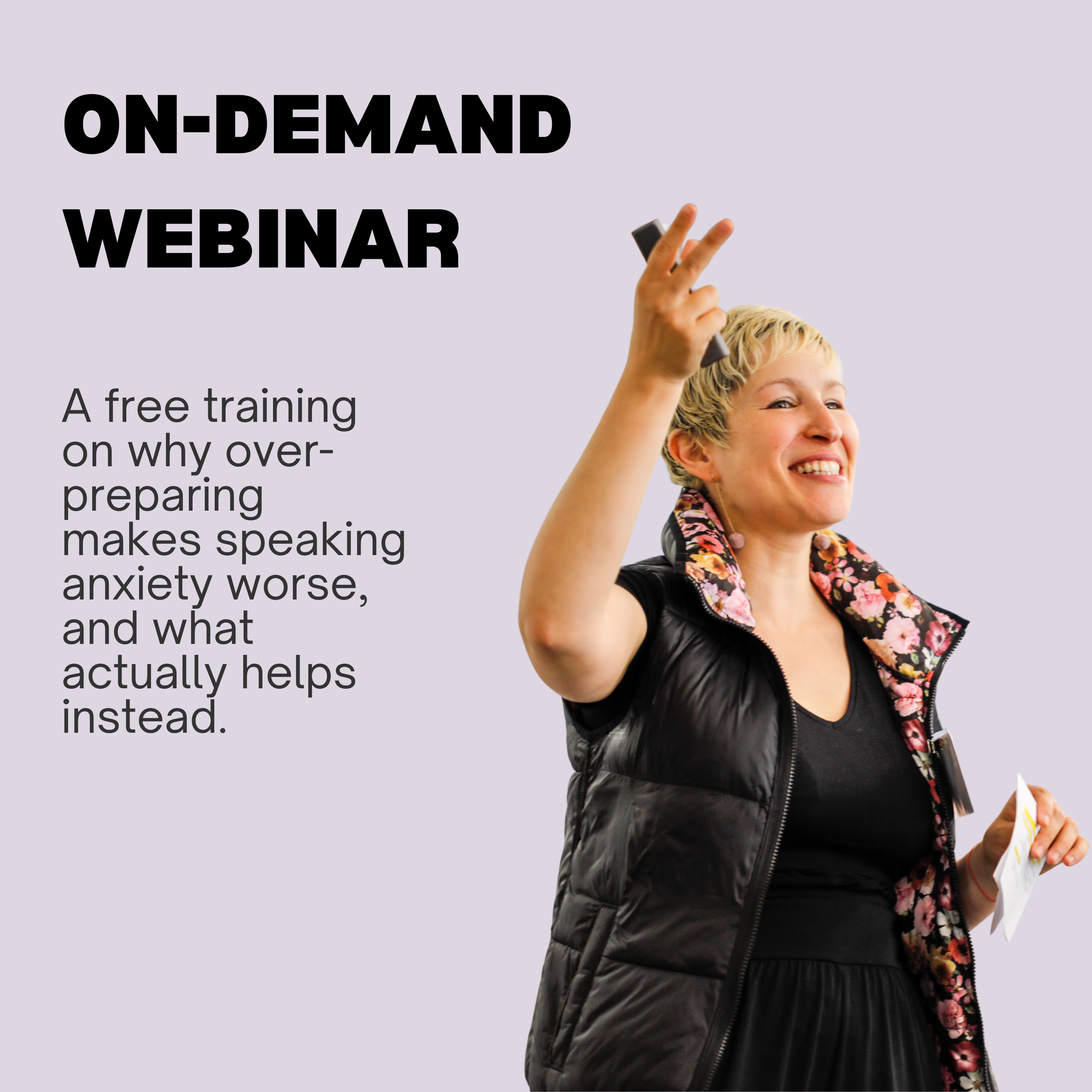
If you want to understand why this is happening:
Watch the free training. It’s 15 minutes and will change how you think about speaking anxiety entirely.
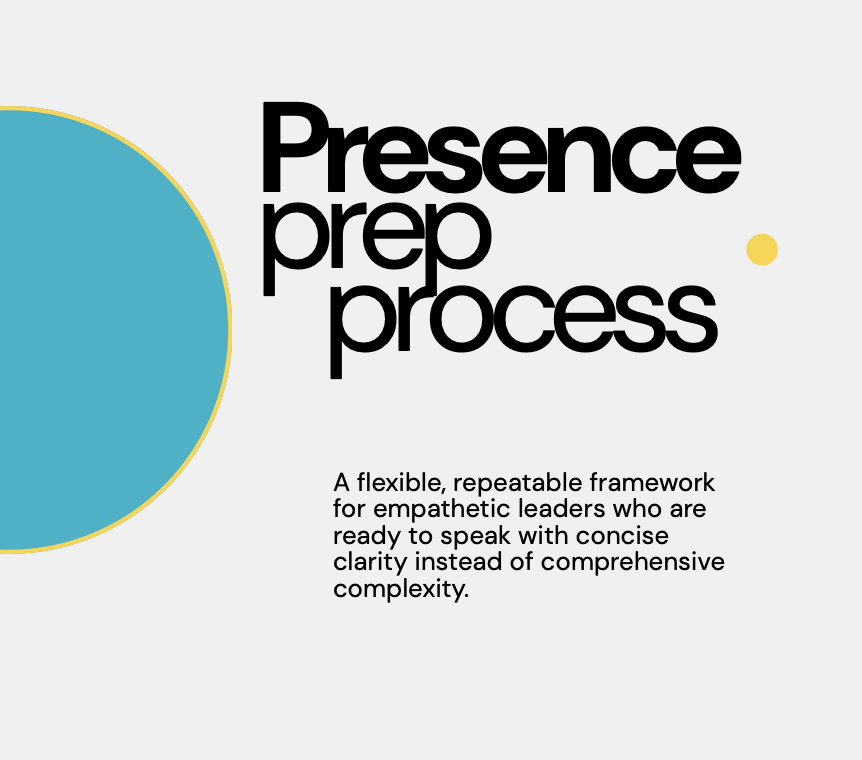
If you want a tool to use before your next meeting:
Get the Presence Prep Process, a free, simple framework for the ten minutes before any high-stakes moment.